Categories
Researchers Develop Microscopic Nano- Robot Entirely from DNA.

Photo Credit: INSERM, twitter.
Researchers Develop Microscopic Nano- Robot Entirely from DNA.
The wake to a new day in today’s world, is a wake to new, advanced and groundbreaking strides in technology promising a better future that says goodbye to obsolete and tasking ways of carrying out our activities, to unimaginably easier ways of doing things.
You would be forgiven for thinking the headliner you read is from some science fiction movie. Shockingly this is reality and has come to make medical research easier.
INSERM (Institut national de la santé et de la recherche médicale) researchers recently have completed construction of a tiny nano-robot completely out of DNA and will be utilizing this in the study of those invisible processes and activities that go on in the cells that make up our bodies.
The Montpelier based institute employed the DNA origami technology that enables the self-assembly of 3D nanostructures in a predefined form using the DNA molecule as construction material. Over the last ten years, the technique has allowed major advances in the field of nanotechnology.
This enabled the researchers to design a “nano-robot” composed of three DNA origami structures. Of nanometric size, it is therefore compatible with the size of a human cell. It makes it possible for the first time to apply and control a force with a resolution of 1 piconewton, namely one trillionth of a Newton — with 1 Newton corresponding to the force of a finger clicking on a pen. This is the first time that a human-made, self-assembled DNA-based object can apply force with this accuracy.
The team began by coupling the robot with a molecule that recognizes a mechanoreceptor. This made it possible to direct the robot to some of our cells and specifically apply forces to targeted mechanoreceptors localized on the surface of the cells in order to activate them.
Such a tool is very valuable for basic research, as it could be used to better understand the molecular mechanisms involved in cell mechanosensitivity and discover new cell receptors sensitive to mechanical forces. Thanks to the robot, the scientists will also be able to study more precisely at what moment, when applying force, key signaling pathways for many biological and pathological processes are activated at the cell level.

Photo Credit: INSERM, twitter.
Fresh memories from the terrifying novella COVID-19 Virus Epidemic, flashbacks to loved ones lost, Almost an entire year of an exhausting lockdown, a strenuous and dreadful period for health workers all over the world, can the world take yet another blow from another looming viral epidemic?
Following, the World Health Organization, WHO half year report, published June 2022, a multi- country outbreak has been declared. With over 3,413 laboratory confirmed cases of monkey pox from 50 countries between January and June alone.
Alarmingly since, the half year report in June, currently, an additional 1,310 cases have been reported and 8 new countries added to the outbreak list. The majority of confirmed cases are reported from European countries (86%). Other regions reporting cases include: Africa (2%), The Americas (11%), Eastern Mediterranean region (< 1%), Western Pacific region (<1%). So far only one death has been recorded all over the world. This death case was reported from Nigeria as of the second quarter of this year.
What is this Monkey Pox disease? Where did it come from?
Monkeypox is a viral zoonotic disease, caused by Monkeypox virus, recognized as the most important orthopoxvirus infection after the eradication of smallpox. Historically, Monkeypox cases were first ever reported from Africa, starting from the Democratic republic of Congo, in 1970. So far two clades of the Monkeypox virus have been discovered to exist, one prevalent in West Africa and the other emerging from the Congo Basin in Central Africa.
How does this disease spread? Who is at risk at of Contacting Monkeypox?
Monkeypox virus is the causative agent of the Monkeypox disease. It is transmitted through contact with infected skin, body fluids, or respiratory droplets.
With the disease formerly being only prevalent in Africa, the spread of this disease to other regions of the world has been all traced to contact with African rodents, which are suspected intermediate hosts of this disease.
Monkeypox spreads through close contact, according to the Centres for Disease prevention and Control, CDC. That includes direct physical contact with lesions as well as “respiratory secretions” shared through face-to-face interaction, and touching objects that have been contaminated by Monkeypox lesions or fluids. The virus may also pass to a foetus through the placenta.
Many of the cases in the latest outbreak appear to be connected to sexual contact, but Monkeypox is not an STD.
“Monkeypox is not a sexually transmitted infection in the typical sense, but it can be transmitted during sexual and intimate contact, as well as with personal contact and shared bedding and clothing,” says the CDC.
The CDC states that it’s not clear whether Monkeypox can spread through semen or vaginal fluids, but the virus can not be spread without presentation of symptoms.
Anyone who has had contact with someone with a Monkeypox-like rash, or who has had contact with someone who has a probable or confirmed case of Monkeypox, is at high risk for infection.
However, a large number of cases in this outbreak have been in men who have sex with men, including gay and bisexual men, and public health officials are focusing their prevention efforts in this group. The virus is not unique to this community, but the nature of its close-contact spread has led to a disproportionate impact.
What are the symptoms of Monkeypox to watch out for?
Monkeypox disease begins with constitutional symptoms that include fever, chills, headache, muscle aches, backache, fatigue and subsequently rashes.
However some atypical features of the Monkeypox disease may surface. These atypical symptoms include:
• Presentation of only a few or even just a single lesion
• Absence of skin lesions in some cases, with anal pain and bleeding
• Lesions in the genital or perineal/perianal area which do not spread further
• Lesions appearing at different (asynchronous) stages of development
• The appearance of lesions before the onset of fever, malaise and other constitutional symptoms.
See your physician if you notice these symptoms.
Is Treatment Available ?, Can I get a vaccine against Monkeypox infection?
According to the Centre for Disease Control, CDC, there is no approved treatment specific for Monkeypox. But because it’s genetically similar to smallpox, doctors can use similar treatments, such as antiviral medications.
The CDC is currently making doses of Tecovirimat, an antiviral medication, available for Monkeypox patients at risk of severe disease. This may include those whose infection has advanced into the severe stage and people with weakened immune systems.
WHO says treatment for monkeypox should also include efforts to manage symptoms and complications.
Two vaccines have been developed in the US, but currently not everyone is eligible to get one. However the smallpox vaccine, ACAM2000, currently is also effective in preventing Monkeypox infection. The CDC however has outlined that people with some health conditions shouldn’t use the smallpox vaccine.
The vaccine, Jynneos, is specifically intended for monkeypox, but it’s in short supply and with eligibility restrictions on it, only People who are known, confirmed contacts of people with monkeypox are eligible to be vaccinated. Also eligible, are presumed contacts who had a sex partner in the past 14 days diagnosed with monkeypox, those who had multiple sex partners in the past 14 days in an area where monkeypox is spreading, and those whose jobs may expose them to monkeypox, according to the CDC.
How do I keep myself safe amidst the spread?
• The CDC recommends close contact or shared objects with someone with monkeypox. Frequent hand-washing is also recommended.
• For social gatherings including parties, raves, clubs and festivals, the CDC says to stick to events with more clothing, where skin-to-skin contact may be less frequent.
• Avoid sex or close physical intimacy if any partner involved has monkeypox. If you do have sex and you or your partner have confirmed or suspected monkeypox, the CDC recommends keeping a physical distance of at least 6 feet between partners, washing toys and avoiding contact with the rash.
• “If rash is confined to the genitals or anus, condoms may help; however, condoms alone are likely not enough to prevent monkeypox,” as recommended by the CDC.
Categories
Learn New Health Facts
6 Popular Health Myths that are now debunked, that you need to know about!
https://t.co/bUwxT6r7eXhttps://t.co/bUwxT6r7eXhttps://rumble.com/v1c4zuz-6-popular-health-myths-debunked-you-need-to-know.html?mref=179dxj&mc=e4upl
Categories
Health Myths vs Facts
6 Popular Health Myths that are now debunked, that you need to know about!
https://t.co/bUwxT6r7eX
Categories
Medical Ignorance
MEDICAL IGNORANCE IS A GREATER DISEASE!
Everyday that passes by that at least 1 person in our communities suffer from the consequences of listening to popular medical misinformation circulating the streets and social media.
From the Agbo patrons to the cosmetic and body enhancement product vendors who by preying on the medical ignorance of the masses are only after getting the value exchange of their whack products without putting your health first.
Your health is everything, it should always be your health first. A breakdown and everything you’ve worked for crumbles, so always put your health first. In this vein always look out for the health information you hear. Medical health information that help you lead a healthy life are obtained from years of study and research, not some fabricated conspiracy to sell a product.
To verify any health information, ask for research proof and tests carried out to obtain this information before trusting such. If you do not have an idea for assessing such information, please talk to your physician (Medical Doctor) not quacks.
As a medic who is passionate about your health, I have a YouTube channel that helps you discern between myths and facts on very popular health topics and information circulating the streets and social media, and this information is proven from research and quotes from professional health experts/ practitioners.
Check out my videos , subscribe and leave questions, I’ll answer.
How true is the saying that we get sick from staying out in the cold?
How do we prevent getting sick from staying out in the cold?
https://youtu.be/q0r_DBipN7s
Watch as all these and more important health questions get answered and explained in the best possible way.
Watch, like comment and SUBSCRIBE 🙏. It’s educative and enlightening, together we can live and stay healthy.

Categories
Weight Gain; Everything you need to know
Are you looking forward to gaining some weight, and can’t find the plan and weight gaining strategy?
Have you tried out some weight gaining tips you prolly looked up online and they didn’t help you gain more pounds?
Are you intrigued and fascinated by knowledge and you look forward to learning the mechanisms of how the body can gain weight and how different it can be for various individuals?
If yes ,then this is one video you can’t miss out on.
If No, your friends and family members might just have been searching for this.
Like subscribe, leave comments and questions and share🥰
Remember to stay healthy.
https://youtu.be/pn7lCOOXFBg
Categories
Diarrhea;Everything you need to know
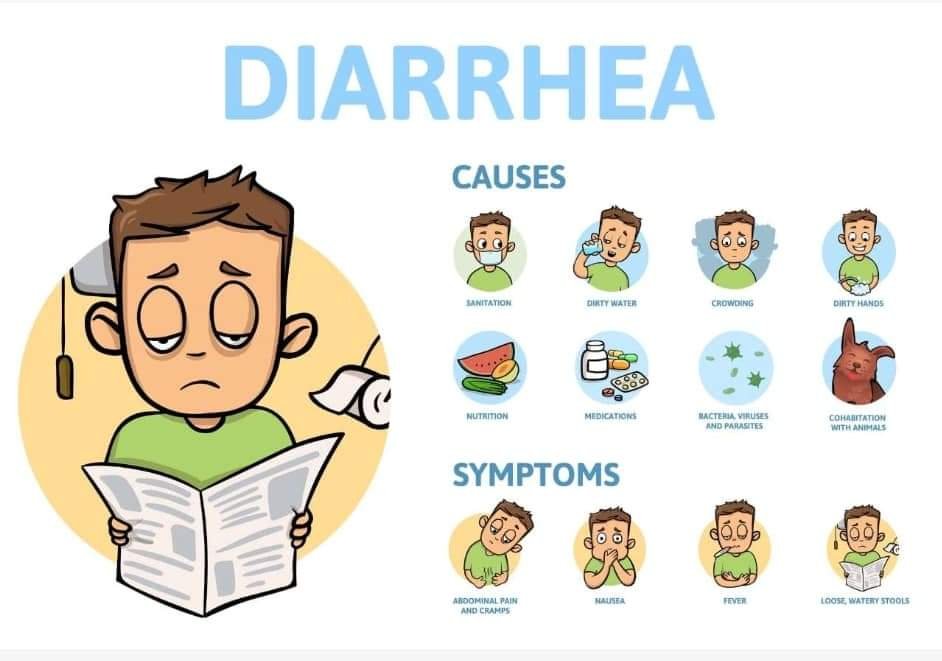
Diarrhea, Everything you need to know.
Have you ever had to leave class, an appointment, work or a meeting to go use the toilet or because you noticed your stomach rumblings were becoming too loud and embarrassing, lol😂😂😂, and from there you had to poo or feel like using the toilet more than 3 times that day, your stool running like tap water with loud rumblings as if Thor was summoning thunder, feel like vomiting, feel abdominal pain or cramps, and so on? Well certain to say that if we relate on this incidences, then we must have suffered diarrhea.
I guess we all have had such moments and will love to know what actually causes this, and how to stay on guard and act fast on occasions such as these.
When do I know I’m having diarrhea: if you ever feel or witness these then there’s a chance you’re having diarrhea.
Urgent and frequent stooling or it’s urge, watery stool, stomach rumbling, nausea/ vomiting, abdominal pains/cramps, fever and chills, dizziness or fainting, fatigue and bloating.
Are there types of diarrhea I need to know? Yes. Diarrhea can be classified into:
*Acute diarrhea: most common and doesn’t usually require special treatment, it usually lasts a day or two and resolves on its own
*Persistent diarrhea: this lasts for about 3 to 4 weeks and requires special attention or treatment.
*Chronic diarrhea: this comes and goes regularly and could last a lifetime, usually has triggers and is associated with some underlying conditions, needs special treatment.
Who can suffer diarrhea?;well anyone can suffer diarrhea, adult, child or infant. However it is more severe or can turn out to be life threatening in infants and the elderly because of the body’s inefficiencies in regulating body water at these ages.
What is the cause of Diarrhea? Bacterial infection of the gastrointestinal tract (salmonella spp, shigella),viral infections (usually rota virus),parasitic infections, these 3 are usually food borne infections, in that they are transmitted via contaminated food and drinks.
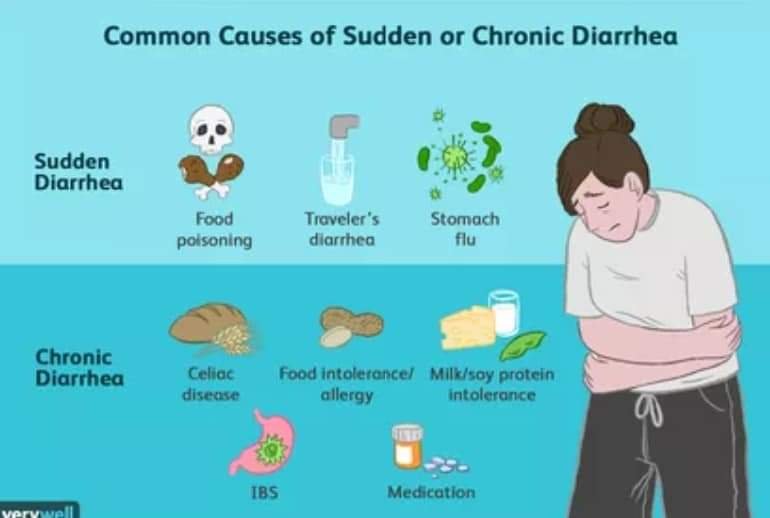
Food allergies, some people maybe allergic to foods such as grains, cereals , cow milk and diary products, sea food and egg and can trigger diarrhea.
Intolerances; lactose intolerance, fructose intolerance.
Digestive tract problems; Celiac’s disease, Chron ‘s disease, irritable bowel syndrome, ulcerative colitis and small intestinal over growth.
Long term use of some medications. Such as antibiotics, laxatives and chemotherapeutic drugs for cancer.
Complications of Diarrhea:
Dehydration; due to frequent stooling fluid and body electrolytes (sodium, potassium,calcium,etc) are lost in excess, and this results in the feeling of tiredness or fatigue accompanied by the sensation of thirst. Dehydration can be in stages, mild and severe, the latter can be fatal and might result in fainting, dizziness, confusion or delirium and must be handled as an emergency.
How do I diagnose diarrhea?,well for the acute and mild form of diarrhea,you usually do not require an expert to diagnose this for you, except in cases of blood in stool, very foul smelling stool or black stool, and severe dehydration. In the other forms of diarrhea you’ll require a doctor to diagnose and prescribe treatment as these forms usually involve underlying conditions. A stool test, blood test, endoscopic test or breathing test can be used to determine the reason for the diarrhea.
This is to say sometimes diarrhea might be a symptom of an underlying condition and not necessarily an outright illness.
How do I treat or manage diarrhea? For the mild or acute form of diarrhea, a simple over the counter medication such as Bismuth salicylate or pepto-Bismol, or loperamide hydrochloride can help reduce bowel movement and reduce the frequent watery stools. An overdose of the afore mentioned drugs can result later in constipation.
For the other forms, you should schedule an appointment with your doctor and specific treatment will be prescribed.
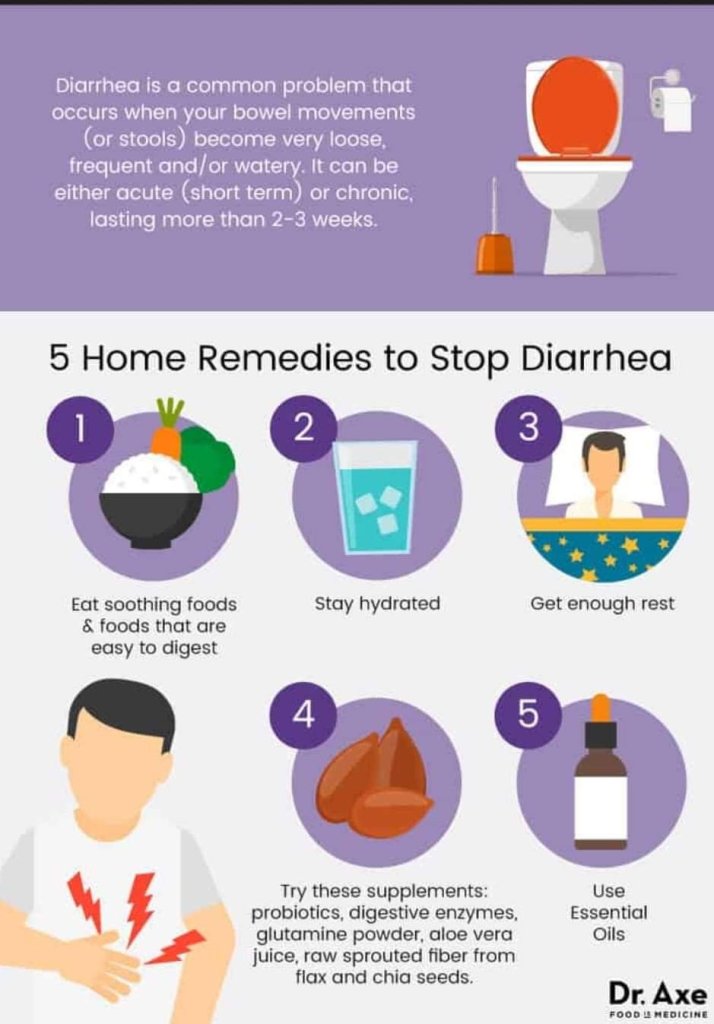
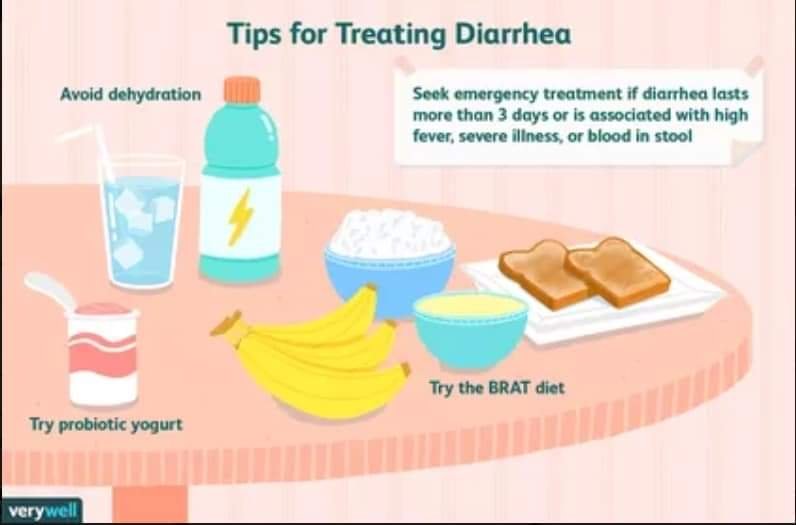
Do’s and Don’ts when suffering diarrhea.
Do’s
Stay hydrated, via intravenous or oral rehydration solutions, there is a commercially sold oral rehydration powder, that can be dissolved in water following the directives on its packaging.
Drink enough/plenty water.
Drink caffeine free electrolyte balanced sodas.
Eat potatoes, white rice, bread, noodles, chicken or turkey without skin, fish.
Don’ts:
Strongly avoid caffeinated drinks ,as they can produce laxative or diarrhea like symptoms. Coke, coffee, green tea and also chocolates.
Change diet; avoid fatty, fried or greasy foods, avoid foods that make you fart or increase stomach gas; beans lovers association no be for diarrhea ooo…, cabbage, brussels, beer (ndi hero and Heineken), carbonated beverages, diary products such as milk,cheese,etc(sometimes diarrhea can make us unable to digest milk temporarily- lactose intolerance).
Can I prevent diarrhea? Yes!
*Washing your hands always can help you prevent hand to mouth or food borne infections. Wash hands with soap and water ,this is good hygiene.
*Get vaccinated; viral infection via rota virus can be prevented by getting vaccinated against rota virus, it is usually given to infants at several stages of first year if life, so there’s a chance you are already vaccinated already, if not so, get vaccinated.
*Store your food properly, and avoid eating spoilt food, ndi let it spoil in my stomach gang, this one is for you people. If food isn’t stored at the right temperature it will spoil, egusi soup lovers you know this.
*Watching what you eat when you travel, especially for fruits you and hand processed foods, African salad for example, avoid them in places you’re unsure of their hygiene. It’s better to eat processed foods when you’re unsure of food preparation hygiene.
Always remember to see a doctor if all the tips here prove unsuccessful, health is wealth, don’t pay the price.
Share and invite friends to follow this page, I’m open to questions and more contributions let’s keep our community healthy.
Categories
Just How much Do we know About ED?
Just how much do we know about Erectile Dysfunction,ED (Impotence)?
Due to societal expectations on males during make outs, most males suffering from ED never want to deflate their ego talking about their concerns about this condition.
Just before we dive in, what really is erectile dysfunction?
Erectile dysfunction,Ed for shorts, formerly called impotence is a condition where a male is unable to achieve a firm, and lasting erection sufficient to satisfy your partner. People ask is there a parameter that medically describes what a standard erection is ?, Well how erect you’re depends primarily on the size of the penis , on the average a penis of about 5-5.5In WHEN ERECT or beyond is considered normal. However other factors can affect achieving complete, lasting and firm erection, but how do you know you or your partner has ED?
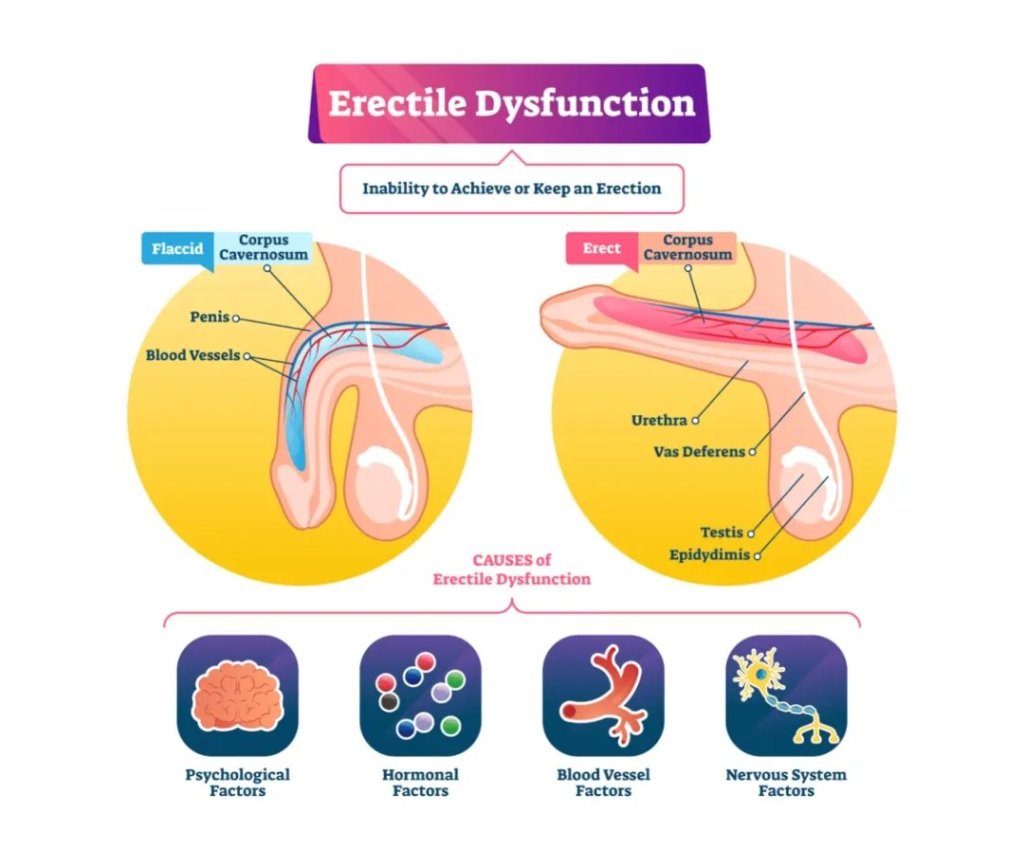
The major symptoms of ED you should look out for viz;
✅ Incomplete firmness of the penis upon erection
✅ Unsustained erection beyond at least 2 minutes ( this is not usually a good parameter for diagnosis,but is a reason for concern, you should see your doctor, an average person has a natural induced erection sustained for about 10mins, however there are people below or above that are normal and healthy,this is relative to individuals).
✅ Strongly curved penis upon erection
✅ Failure to respond to stimulation upon several attempts.
However to diagnose you of ED, your doctor will need you to undergo physical examination of your genitals, blood and urine tests, Nocturnal penile tumescence test, ultrasound test and erection stimulation injection test and confirm the underlying cause of your ED. Studies show that often 35-75% of diabetic men end up with ED.
Conditions often associated with ED are:
Premature Ejaculation
Delayed Ejaculation
Anorgasmia (inability to achieve orgasm after multiple apt stimulation).
What are the CAUSES of ED?
. Diabetes
. Cardiovascular diseases
. Hypertension
. High cholesterol levels
. Obesity
. Low Testosterone levels ( hormonal imbalance)
. Kidney diseases
. Stress
. Anxiety
. Depression
. Relationship issues
. Sleep disorders
. Aging
. Certain Medications (such as antihypertensive drugs)
. Drug abuse
. Alcoholism
. Smoking
. Lifestyle/ sexual activities
. Spinal cord injuries
.Untreated syphilis
. Peyronie’s disease. etc.
TREATMENT and the healthy LIFESTYLE to manage ED
A basic understanding of how erection comes about will help us understand treatment, management and the pathology of ED. Erection occurs as response to stimulation by touch or thoughts, in response to this stimulation your Central nervous system sends signals for a increased blood flow into the penis, with it’s numerous blood vessels in it’s tissues, tugor builds up, hence the increase in size. Thus any interference with blood supply and it’s initiation to the penis can lead to ED, and drugs used for treatment are those that will increase blood flow to the penis.
Please talk to your doctor before taking any drugs for your condition.
. Sildenafil (Viagra)-oral
. Avanafil (stendra)-oral
. Tadalafil (Cialis)-oral
. Vardenafil (Levitra)- oral
. Alpostradil (Carveject)- injection
These drugs can enhance performance by sustaining blood flow to the penis for an average of 30-40 minutes.
Other treatment options include
✅ Therapy (Talk it out); this is best when the cause is psychological for example stress, depression and relationship induced ED will be best resolved with therapy.
✅ Acupuncture ( make sure this is carried out by a medically certified acupuncturist ).
✅ FDA approved herbs and supplements, such as Dehydroepiandrosterone ( DHEA ), l- arginine, and l- carnitine supplements; herbs like Ginseng and Yohimbe as administered by a medically certified physician.
Recommended LIFESTYLE TIPS for ED patients;
. Practice kegel exercises ( pelvic floor muscle exercises)
. Practice weekly aerobic exercises, please check with your doctor if you have any cardiovascular condition before embarking on this.
. Practice yoga exercises
. NUTRITION: eat more of fibre rich foods and less of high fat/ cholesterol/ high sugar foods.
. Start management of diabetes early if you discover you have it’s symptoms.
. Find ways to reduce stress
. Avoid unhealthy weight gain
. Seek help if you’re depressed
. Use alcoholic beverages in moderation
. Quit smoking if you do.
. Always go for cardiovascular checks, e no dey cost and start treatment if you have any conditions.
Bonus Tips: Horny goat weed and zinc supplements can help you treat ED, however, avoid abuse of these supplements as they might complicate this condition.
. Surgery, penile implants and pressure pumps can be used in treatment of severe ED, consult with your physician first.
REMEMBER TO LIVE HEALTHY ! HEALTHY BEHAVIOURAL PRACTICES CAN SAVE YOU COST OF TREATMENT.
READ, PRACTICE AND SHARE!
Categories


 know your Health info& Awareness Blog